
21 Hearts: Vivian Bullwinkel and the nurses of the Vyner Brooke

Note: This review discusses key historical events depicted in the performance.
Having previously covered the life, service and legacy of Sister Vivian Bullwinkel on Episode Three of the I Was Only Doing My Job Podcast, I was already familiar with the events surrounding the Vyner Brooke. As a result, I approached 21 Hearts with both a sense of historical awareness and a cautious curiosity about how the events of 16 February 1942 would be portrayed the stage of the Australian War Memorial for its inaugural theatrical performance.
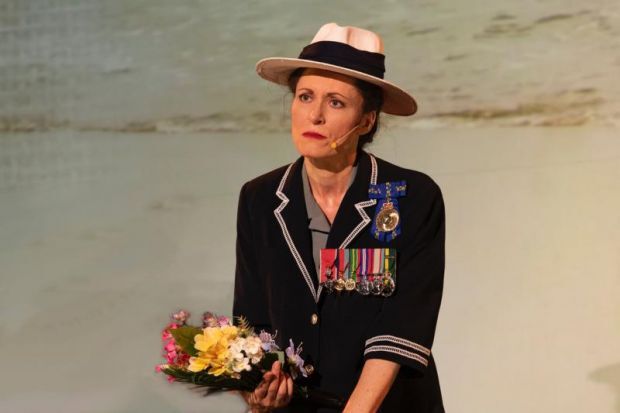
And what Theatre180 has delivered is a respectful and dedicated retelling of the event and the quiet heroism and enduring resilience of the nurses involved. Written by Jenny Davis, and directed by Stuart Halusz, the play follows six women portraying real nurses from the 2/13th Australian General Hospital, beginning in the days leading up to the fall of Singapore and continuing through their evacuation aboard the Sarawakian royal yacht, SS Vyner Brooke. It isn’t a spoiler to note that after the Vyner Brooke was sunk, twenty-two of the sixty-five Australian Army nurses survived the wreck, along with several civilians. These survivors, along with nearly 100 wounded and stranded British soldiers from another vessel, were later massacred by Japanese forces after surrendering. Only three would survive: Vivian Bullwinkel, portrayed superbly by Rebecca Davis in a role that carries a lot of emotional and historical weight, but one that Rebecca shoulders with ease and grace. The other survivors of the sinking are Private Patrick Kingsley, represented by audio recordings; and Stoker Ernest Lloyd, who survived the war as a prisoner but is neither mentioned nor portrayed in the performance. This omission is understandable, however, as the story is essentially about "Bully," as Sister Bullwinkel is affectionately known.
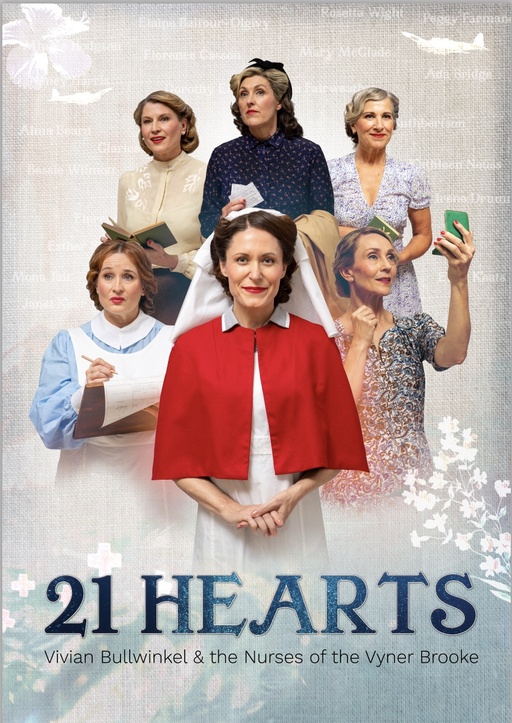
And while this is ultimately the story of Vivian Bullwinkel, it could not be told without the other twenty-one hearts that give the show its name, portrayed expertly by the rest of the ensemble. Their presence gives the narrative its full emotional weight.
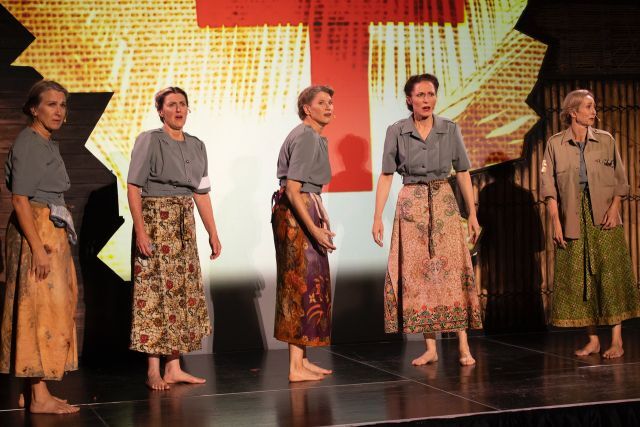
The casting throughout 21 Hearts was superb, with each of the six women bringing a distinct emotional depth to their portrayal of multiple characters, often within the same scene and with little more than a shawl or an accent to distinguish them.
One notable aspect was the production’s deliberate choice to cast women older than the twenty-somethings they portrayed. When I asked director Stuart Halusz about this decision, he explained that it was intended to show the nurses as they could have been, had their lives not been cut short on that fateful day on the beach.
Even so, each actress brought the energy and idealism you would expect from young nurses embarking on what they believed would be a grand adventure of dances and palaces, an adventure that turned swiftly to brutality, death, and despair. Rather than depicting the barbarity of the massacre directly, the play chooses a tasteful and respectful approach, time-jumping to the 1946 War Crimes Tribunal to recount Bullwinkel’s testimony.
Each character was immediately recognisable. Granted, I had the advantage of having researched the fate of the Vyner Brooke for the podcast, but I want to single out the portrayal of Matron Irene Drummond, perfectly played by Caitlin Beresford-Ord. From the moment she stepped onto the stage, I knew who she was. There was not only a striking visual similarity, but also a bearing, a tone, and a presence that left no doubt, long before “Bully” introduced her to the audience.
Considering the subject matter, the play tells the story of Vivian Bullwinkel and the SS Vyner Brooke much as I did when covering her life and legacy on the podcast. Following the massacre, Bullwinkel becomes a prisoner of the Japanese and is reunited with other survivors of the Vyner Brooke. Although this performance includes no intermission, the clear second act shifts perspective to that of a teenage prisoner of war affectionately known as Little Bet, portrayed perfectly by Alison Van Reeken. This is where the single backdrop stage, designed by the director really shines. As the backdrop which incorporates physical and visual elements, through the use of hidden doors, the set changes location without actually moving, and it’s here that the small stage lends itself to the hopelessness of the situation the survivors where in.
This was a part of Bullwinkel’s story with which I was probably least familiar. In my original podcast script, I devoted only a single sentence to her time as a prisoner of war, yet in 21 Hearts, this forms the majority of the performance. It is also here that Little Bet serves as narrator, her youthful optimism sharply underscoring the hopelessness of their situation. The play explores life in the camps, the inner turmoils between nurses and civilian detainees, and the harsh treatment they endured at the hands of their guards. This production pulls no punches.
While the performance runs for roughly two hours, it never felt that long before news reaches the camp that the war is over and Bullwinkel and the other survivors are liberated. My only real criticism, albeit a very minor one, is how rapidly the production moves through Vivian’s post-war life. Given the significant milestones and achievements, she reached up until her death in 2000, including her return to conflict zones as part of Operation Babylift during the Vietnam War (which interestingly marked its 50th anniversary during the production’s run at the Australian War Memorial), it felt rushed. It’s understandable considering the weight of the rest of the story.
One aspect that particularly surprised me came at the end of the performance. While it never explicitly stated it, the production addressed the long-standing allegations that the nurses on Bangka Island were assaulted before they were killed. It approached this harrowing subject with great sensitivity and restraint, never saying it outright, but powerfully suggesting it in a way that was both respectful and deeply affecting.
21 Hearts is not an easy watch, nor should it be. It is powerful, heartbreaking, and unflinchingly honest. What Theatre 180 have crafted is not just a performance but a tribute; one that honours the courage, sacrifice, and resilience of Vivian Bullwinkel and her fellow nurses with great care and reverence. For those familiar with her story, it adds new emotional depth. For those unfamiliar, it serves as a poignant and necessary education. For those like myself, it brings new emotional weight and nuance. That said, I’ll admit, I found it deeply engaging and even, at times, entertaining, it has left me reflecting on my own telling of Vivian’s story, and perhaps an inspiration to revisit it.